


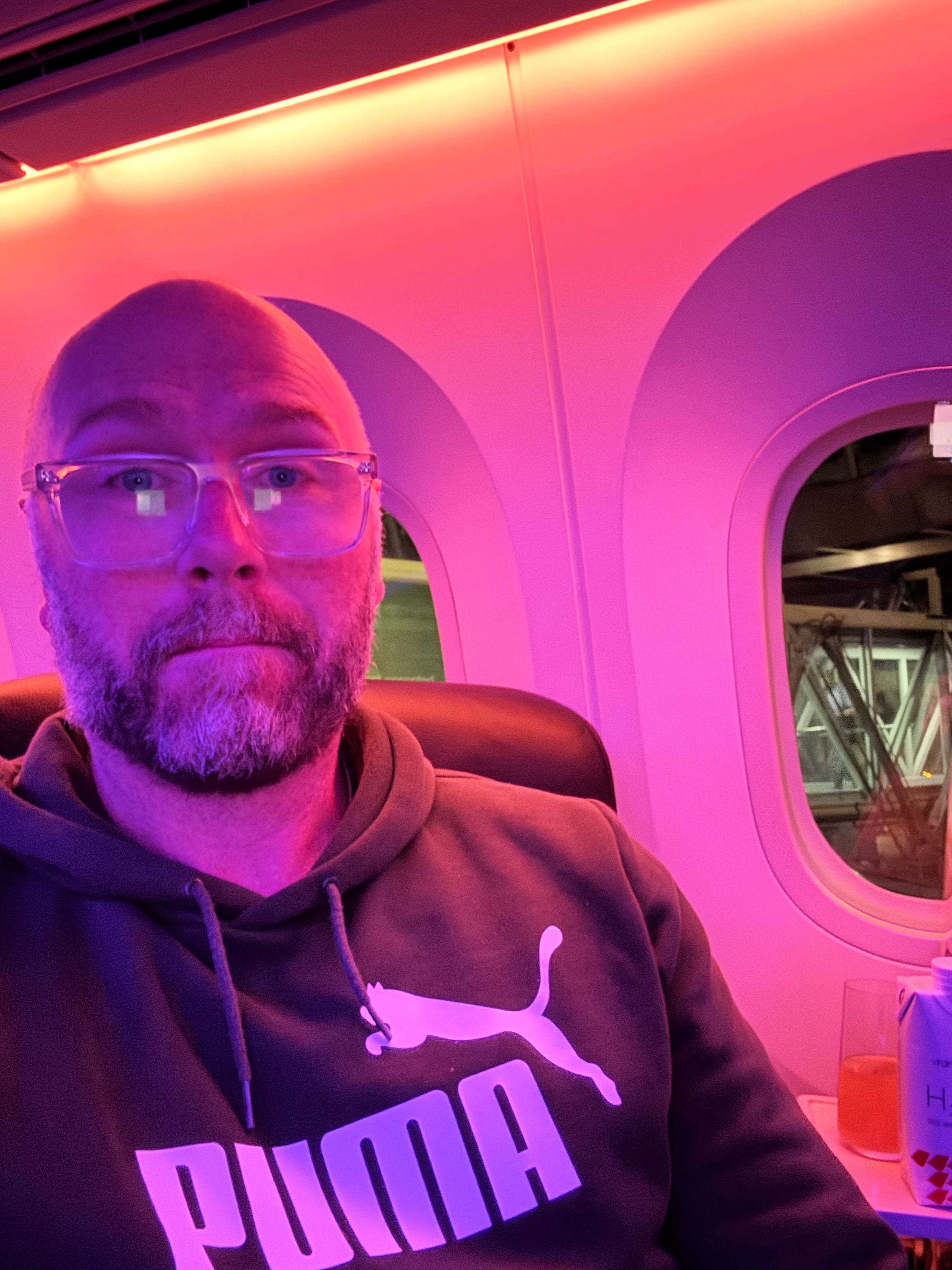
Right. Confession time.
This week I flew Upper Class on Virgin Atlantic from Johannesburg, South Africa, to London. An 11-hour flight that was, I want to be honest here, absolutely fricking brilliant.
The lovely, relaxing lounge before the flight. Food, drinks, and a shower. Fast-track through security so I wasn’t stood behind seventeen families arguing about hand luggage. A private booth on the plane with a proper flat bed, lovely food with actual cutlery, and someone who brought me coffee, a beer, or a G&T when I asked. Wash facilities before we landed, so I stepped off the plane feeling human instead of feeling like something they’d found in the seat pocket. And when we landed at Heathrow, my bag was one of the first onto the belt. Then I had a revivals lounge where I could chill out before getting in my car and tackling the traffic home because that’s how it works when you pay for the good ticket.
I want to make one thing very clear before we go any further. I know how that sounds. I know exactly the eyebrow you just raised. I am a British man in my forties writing publicly about a flight I paid a lot of money for and enjoyed enormously, which is roughly the same category of social offence as farting in a lift or admitting you don’t really like your mother-in-law. We are not supposed to do this. We are supposed to say the flight was “actually really good, thanks,” and change the subject to the weather.
I’m not going to do that today. Because lying in that flat bed somewhere over the Sahara at three in the morning, with the little curtain drawn, earplugs in, eye mask on and the noise of the plane muffled to a hum, I had one of those slightly annoying middle-aged epiphanies about money.
Which is this.
Most people, including most of my clients, have absolutely no idea what their money is actually supposed to buy them.
The five things
Here’s what my Upper Class ticket bought. And I mean actually bought, not “a plane ride.” A plane ride is what economy is. A plane ride was the seventeen-hour ordeal I did in the other direction two years ago, from which I emerged so wrecked I lost the first two days of the trip lying face-down in a hotel room. That was not a plane ride I want to repeat.
The Upper Class ticket bought five specific things. And once you see them clearly on a plane, you start seeing them everywhere. In your house. In your week. In the small decisions you make about your Tuesdays.
They are Time. Convenience. Calm. Delight. Comfort.
These are, as far as I can tell, the five things money is genuinely worth spending on. Almost everything else falls into one of two categories: either it buys one of these five things (in which case, good, keep going) or it doesn’t (in which case, why did you buy it?). And most people, if we’re being honest, spend most of their money on things that don’t reliably buy any of them.
Let me go through them.
Time
Money should buy you back the hours you’d otherwise have lost.
The lounge saved me two hours of hanging around a departure terminal that smelt of Nando’s and despair. It allowed me to dedicate my headspace and thought to some things I would never have got to otherwise. The fast-track security saved me forty minutes of queueing. The flatbed meant I slept properly for around 7 hours (so my Oura ring tells me) and arrived in London relaxed, instead of arriving in London ready to lie down for a day and a half. That’s the best part of two days of my life I got to keep. Which, once you actually value your own time, changes what the ticket cost looks like.
We are appalling at valuing our own time, especially in retirement, when we tell ourselves time is the one thing we suddenly have plenty of. Which is nonsense. You have twelve to fifteen good active years after sixty. Every hour you lose to friction is an hour that’s not coming back. So when I see a retired couple driving forty-five minutes to the cheaper supermarket to save eleven quid, I want to sit them down and ask them, gently, whether they’d sell me a whole afternoon of their lives for eleven quid. Because that’s the trade they just made. Nobody stopped them because the trade doesn’t look like a trade. It looks like being sensible.
Time is the thing you’re actually running out of. Money that buys it back is money well spent. Almost every time.
Convenience
This one is different from time and worth separating out.
Think about what actually happened at Heathrow. My bag came onto the belt first. I did not stand there for forty minutes watching everyone else’s suitcase arrive while mine, somewhere, lived its own quiet life in the bowels of the airport. I walked out of arrivals about ten minutes after landing. That’s not time saved, exactly. It’s friction removed. Which is a different thing, and worth understanding on its own terms.
Convenience is the absence of friction. The taxi to the airport instead of the tube with two suitcases. The cleaner who comes once a fortnight so nobody’s arguing about whose turn it is to do the bathroom. The delivery service instead of the hour lost in the car park at Sainsbury’s on a Saturday morning. The person who books your restaurants because otherwise the choice paralysis kills the evening before it starts.
Convenience isn’t laziness, which is what the British brain quietly tells you it is. Convenience is the deliberate removal of low-grade friction from the parts of life that don’t matter, in order to free up energy for the parts that do. It’s a strategic move, not a moral failing.
You know what nobody does on their deathbed? Say “you know what, I really wish I’d done my own ironing more.” Nobody. Nobody says it. So stop pretending that the friction you’re absorbing for the sake of frugality is some form of virtue. Most of the time it’s just a habit inherited from your grandmother, who genuinely did need to worry about the housekeeping. You are not your grandmother. Buy the convenience.
Calm
Calm is where money starts doing its most underrated work.
I sat in the lounge in Joburg with a cup of coffee and read a book for an hour and a half. I did not have to fight for a seat. I did not have to hear a family row over whose turn it was to hold the passport. I did not have to overhear a business call from a man in a lanyard shouting about Q3 numbers.
I was just, quietly, calm.
And that calm carried through the whole journey. I was not rushing. I was not stressed. I was not scanning the departures board with rising panic. The money I paid for the ticket bought me, more than anything else, the internal experience of the day. The texture of my own nervous system between three in the afternoon and eleven in the morning the next day.
Money spent on calm is almost always underrated because calm doesn’t photograph well. You can’t Instagram calm. You can’t brag about it. It’s invisible from the outside. But if you have ever spent a day feeling calm and unhurried, and then spent a day feeling harried and rushed, you know which day you’d rather have. Money that reliably buys you the first kind of day is not a luxury. It’s medicine.
Most affluent people I know have plenty of money and almost no calm. Something’s wrong with that maths.
Delight
Delight is the small joy. The moment that stays.
The food on the plane was properly good. Not “airline food good,” which is a low bar. Properly good. The wine was properly good. Someone brought me a little pot of quality crisps and a beer. That little pot of crisps, in the darkened cabin, at cruising altitude, made me smile. Which is not something economy has made me do in probably fifteen years.
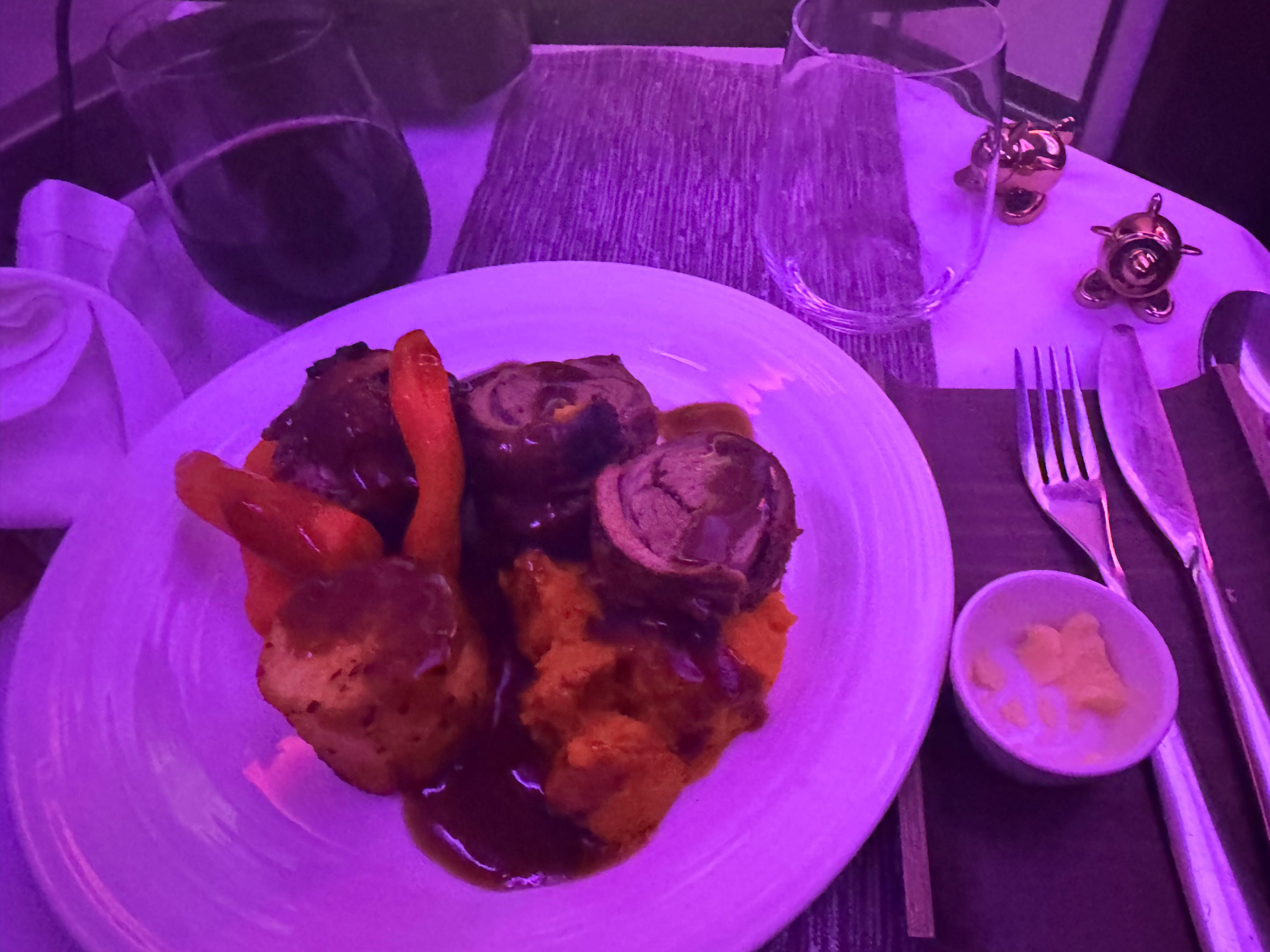
Delight is the thing your money should be buying you constantly and almost never is. Because most people have got themselves stuck in a mindset where they spend on things that are “sensible” or “practical” or “we’ll get our money back on the resale value,” and they’ve stopped, quietly, over the years, spending on things that just make them smile.
You are allowed to be delighted. You are allowed to spend money on small or even big joys. You are allowed to buy the good coffee, the good olive oil, the surprise flowers, the ridiculous cheese. You are allowed to book the concert you’ll be thinking about for a fortnight afterwards. You are allowed, more importantly, to build a life where those moments are common rather than rare.
The money in your account is not a scoreboard. It’s fuel. If you’re not converting a decent chunk of it into delight, it’s not doing the job it exists to do.
Comfort
Comfort is the last one, and it’s the one men in particular are absolutely terrible at.
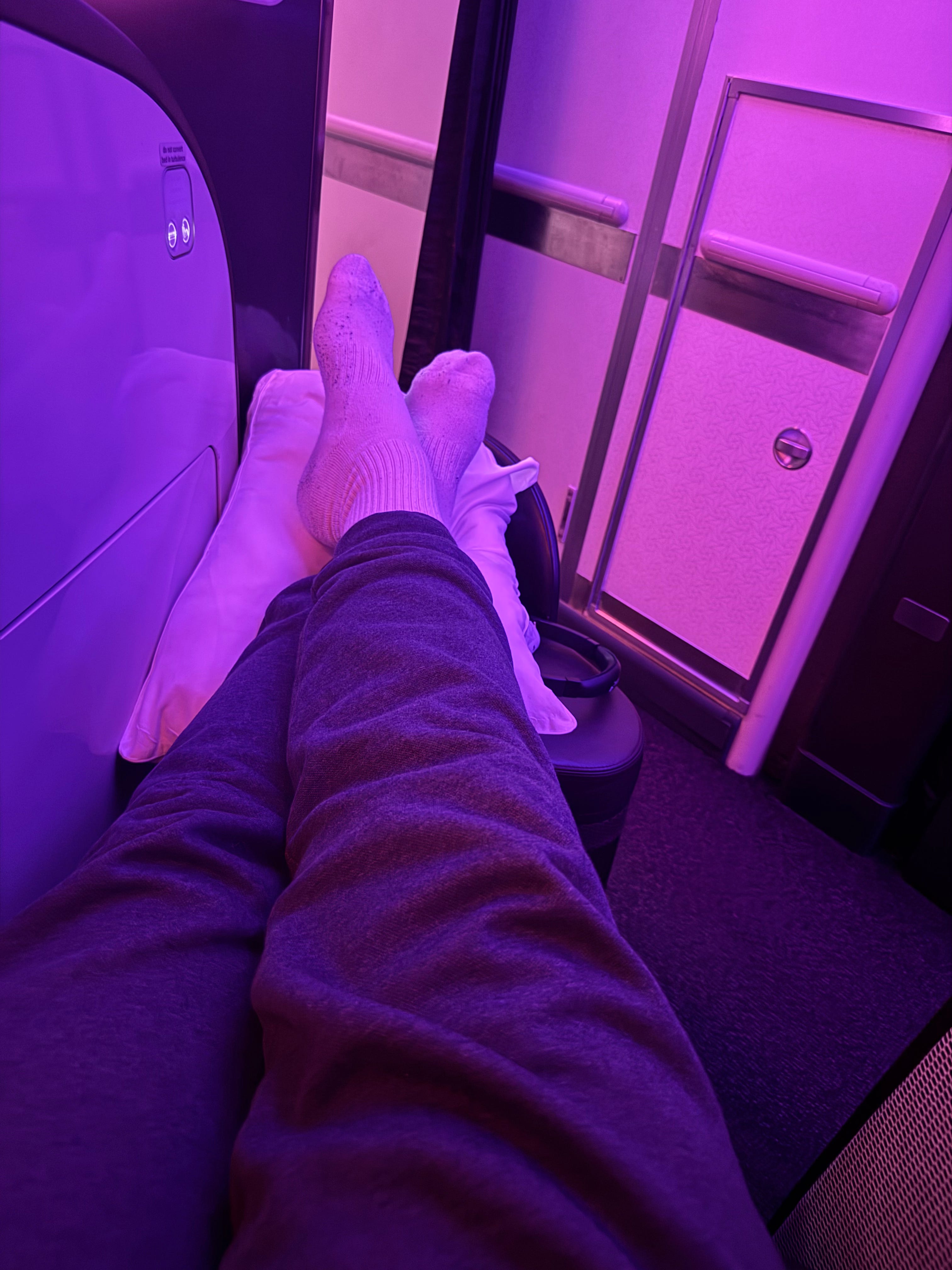
The flat bed meant my back didn’t hurt. My knees didn’t seize up. My feet weren’t swollen. I stepped off the plane with a body that felt like a body I recognised, rather than a body that felt like something rented from a very cheap hire company.
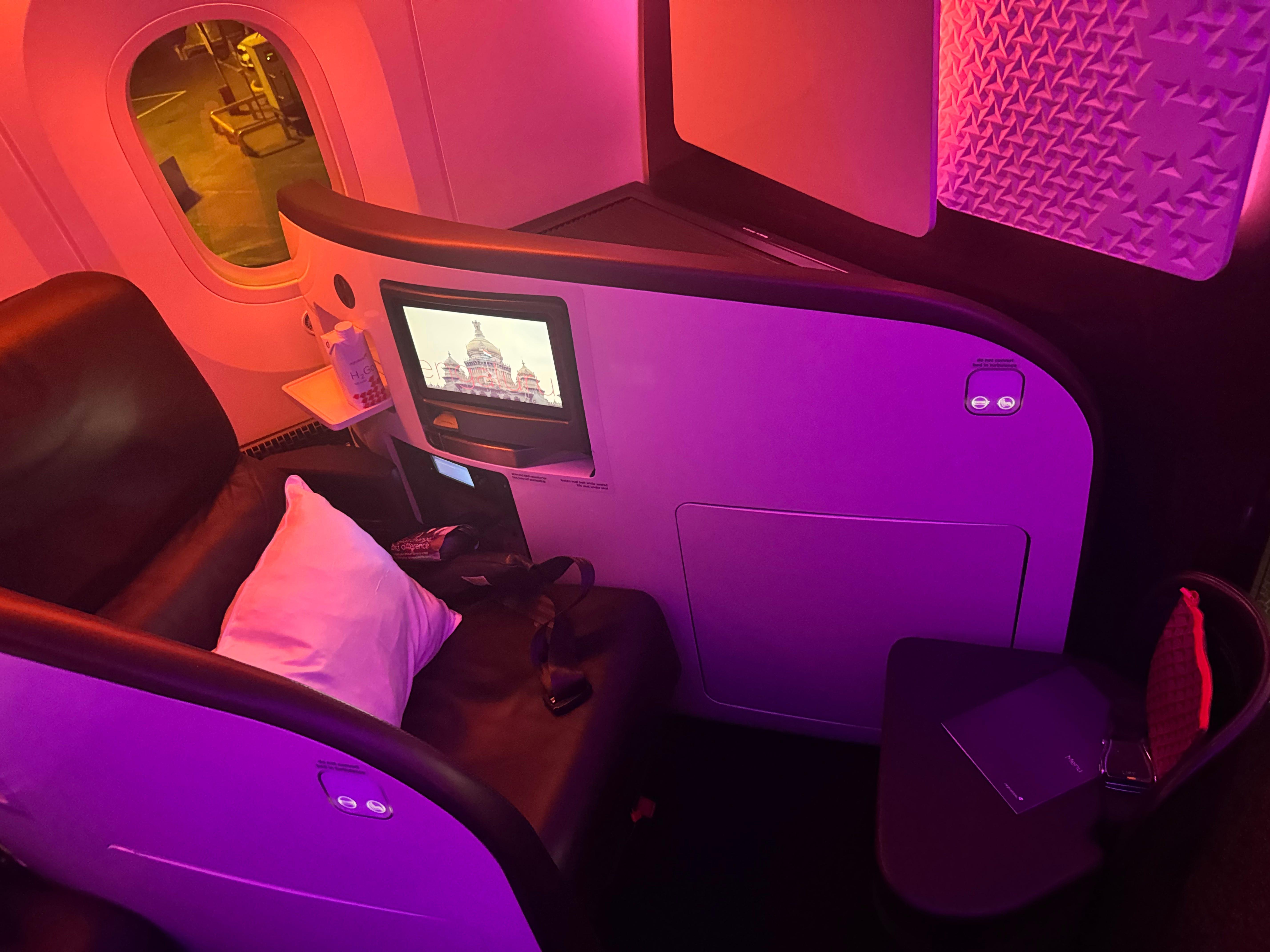
Comfort is not decadence. Comfort is your body not being in low-grade pain and low-grade tension for the parts of your life that don’t need it to be. And the older you get, the more this matters. A body that isn’t uncomfortable has more capacity for everything else, more delight, more calm, more attention, more presence. A body that’s in low-grade discomfort all day is a body that’s stealing from your ability to enjoy your own life.
Which means the mattress matters. The shoes matter. The chair at your desk matters. The pillow you take on holiday because your hotel one is always wrong matters. The extra room in the car. The heated seat. The good jumper. The proper coat. None of this is soft. All of it is you refusing to spend the next twenty years slightly uncomfortable for no reason.
If your money isn’t buying you comfort, and you are affluent enough that it could, what exactly is it buying you? Bragging rights? A slightly larger balance? Neither of those things will meet you in the morning when your back hurts.
What most people spend on instead
Here’s the honest bit. If I look at where a lot of retirees actually spend their money, most of it isn’t going on any of the five things above.
It’s going on the boat that sits on the driveway. The second home that becomes an obligation. The car bought as a status marker that spends eleven months of the year in the garage. The extension nobody uses. The membership at the golf club you barely go to. The wine collection you’ll never drink your way through. The stuff. The stuff. So much of it, stuff.
None of that stuff buys you time. None of it buys you convenience; most of it does the opposite. None of it buys you calm; most of it introduces new anxieties (insurance, maintenance, worry). Some of it might buy you a moment of delight when you first get it, but that decays quickly. And most of it doesn’t buy you comfort; it buys you the idea of comfort, which is something completely different.
Meanwhile, the same person will hesitate over the £4 flat white. Will not buy the better shoes. Will keep the mattress they’ve had for fourteen years because it’s “still fine.” Will take the tube with the suitcases because the taxi is “extravagant.” Will fly economy on a nine-hour flight because Upper Class is “obscene.”
Do the audit. Genuinely. Look at where your money is going and ask yourself which of the five things it’s buying. Time, convenience, calm, delight, or comfort. If most of it isn’t buying any of them, you’re not saving. You’re just moving money from one pile to another without letting it do its actual job.
What this looks like at home
You don’t have to fly Upper Class to apply this. It works at every scale. Your Tuesday. Your kitchen. Your weekend.
The dishwasher tablets that actually work rather than the cheap ones that don’t. Delight and calm.
The cleaner once a fortnight so the weekend isn’t lost to hoovering. Time, calm, and possibly the marriage.
The good coffee machine, if you drink coffee every morning, because that’s fifteen minutes of daily delight compounded over ten years, which is a lot of morning smile time.
The taxi to the station in the rain, not the walk. Time and calm.
The physio appointment the moment your knee starts complaining, not eight months later when it’s a proper problem. Comfort and time.
The direct flight, always, if you can. Time, calm, comfort.
The good pillow. The good coat. The proper walking boots. The heated blanket for the sofa. All comfort, all bought once, all repaying you every week for years.
None of this is showy. Nobody’s going to see it. Nobody’s going to Instagram it. It’s not going to impress the neighbours. That’s the point. Good spending is quiet. It’s dignified. It’s for you.
The point
Money’s job is to buy you the life you want. It has no other purpose.
If it’s not buying you time, or convenience, or calm, or delight, or comfort, it’s not doing its job. It doesn’t matter how much of it you have. A large pile of money that isn’t buying you any of the five things is just a large pile of money. It won’t hug you. It won’t come to your funeral. It won’t make you feel any of the things a well-lived life is supposed to make you feel.
Somewhere over the Sahara at three in the morning, in a flat bed with a pot of crisps, a cold beer and a book I was actually enjoying, I finally properly understood what my industry had been getting wrong for decades. We measure how much money you have. We do not measure whether it’s buying you any of the things worth having.
Fix that. Do the audit. Spend on the five things.
And if you happen to be flying long-haul any time soon, and you can afford it, book the flat bed. Nobody who’s done it has ever regretted it.
Nobody.
Great article, once again, Dan! For years, my wife and I would say, “Life is too short to drink bad coffee or bad wine.” Your article takes it to the next level. I would add one more thing: Money is also good for helping others, especially if you still have a lot left over after spending it on the five things you mentioned. Maybe that can fit under your ‘calm’ category? —Ron, a retired financial advisor in the States.
Dan, this is bloody brilliant! AT 73, I just took my cute self from Arizona to London in exactly the same way this week!! (My OURA ring said I also got 7 hours of sleep.) Why the hell I waited until I had two replaced knees, scoliosis, and grey hair is beyond me. Seriously stupid me! Carry on!